

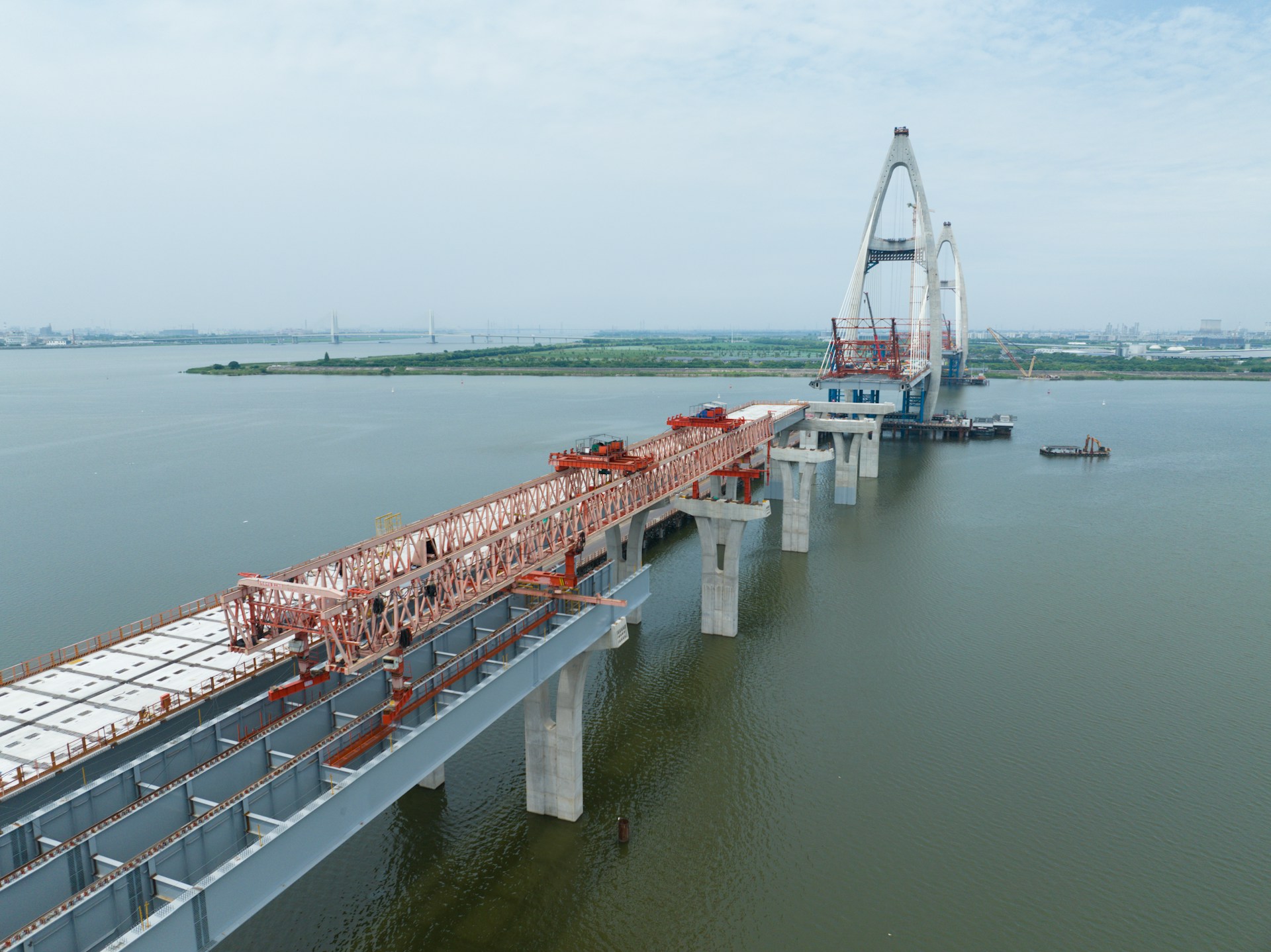
Bridge piers, jetty piles and sea walls sit in some of the most punishing conditions a concrete structure can face: constant tidal cycling, chloride exposure, and — for anything below the waterline — the practical impossibility of a conventional dry-site repair. For decades, the standard answer has been cofferdams: pump the water out, expose the structure, repair it as if it were on dry land. It works, but it is slow, expensive, and not always feasible.
Carbon fibre reinforced polymer (CFRP) systems have offered an alternative for over twenty years, and the underlying research base has grown accordingly. Field studies on underwater pile wrapping — including prestressed piles repaired without cofferdam construction — have shown that FRP wraps applied directly underwater can restore structural capacity while also slowing corrosion of the embedded steel reinforcement. Long-term monitoring tells a similarly encouraging story: one study tracking FRP-concrete bond performance after twelve years of exposure in tidal waters found the bond had held up well enough to support continued confidence in the approach for hydraulic and marine structures.
The engineering challenge is a real one, though, and worth stating plainly. Moisture cannot be fully excluded during underwater wrapping, and residual moisture at the fibre-resin interface reduces the strengthening effect compared with a dry application. This is why the resin system matters as much as the fibre itself: moisture-tolerant, water-activated resins designed specifically for submerged curing perform differently — and need to be specified differently — than standard dry-condition CFRP systems. Treating underwater CFRP as a drop-in substitute for dry-site strengthening, without accounting for that distinction, is where projects run into trouble.
For ACRP’s members working on ports, coastal structures and river crossings, this is a live and practical question, not just an academic one — and it lines up directly with the scope of ACRP’s marine structures working group. The technology is mature enough to specify with confidence, provided the resin system, application method (wet lay-up versus pre-preg, for example) and monitoring plan are matched to the specific splash, tidal or fully submerged zone in question.
Want to be part of ACRP? Become a member!